VAT for small businesses: a plain-English guide
Value Added Tax trips up more new business owners than almost any other part of UK tax — not because the maths is hard, but because the rules about when it applies are easy to miss. Here's the short version.
What VAT actually is
VAT is a tax added to the price of most goods and services in the UK. Registered businesses charge VAT on what they sell ("output VAT"), can reclaim the VAT they paid on business purchases ("input VAT"), and pay HMRC the difference. It's a tax on the end consumer — businesses are effectively just collecting it on the government's behalf.
Do you need to register?
Registration becomes compulsory once your VAT-taxable turnover goes over the current registration threshold in any rolling 12-month period — not just your tax year. Once you cross it, you must register within a set window or face penalties. Many small businesses also choose to register voluntarily before they're required to, usually because it lets them reclaim VAT on setup costs and can make the business look more established to larger clients.
The different rates
Not everything is taxed the same way. The UK uses a standard rate that applies to most goods and services, a reduced rate for a specific list of items (things like home energy), and a zero rate for certain essentials (most food and children's clothing, for example) — zero-rated is still technically "VAT-able", just charged at 0%, which matters for record-keeping even though no tax changes hands. A separate category, exempt, covers things VAT never applies to at all, such as certain financial and medical services.
Zero-rated and exempt sound similar but aren't — only zero-rated purchases let you reclaim input VAT on related costs.
Adding and removing VAT from a price
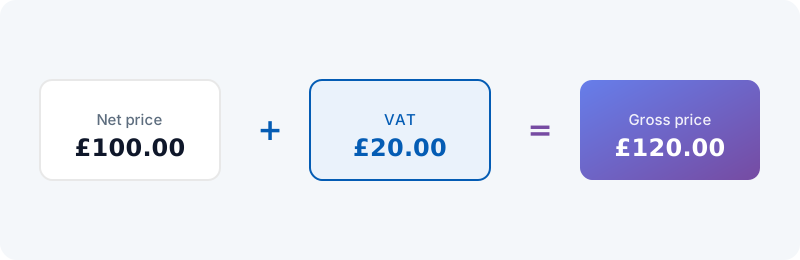
Two calculations come up constantly: working out the VAT-inclusive price from a net figure, and pulling the VAT back out of a gross figure to find the net price. Getting the second one wrong is a classic mistake — you can't just take a percentage off the gross price, because the percentage was originally applied to the smaller, net figure.
A quick note
VAT thresholds and rates change periodically — always check current figures on the official HMRC guidance, or with an accountant, before making registration or pricing decisions. This guide explains the mechanics, not today's exact numbers. See our full disclaimer.